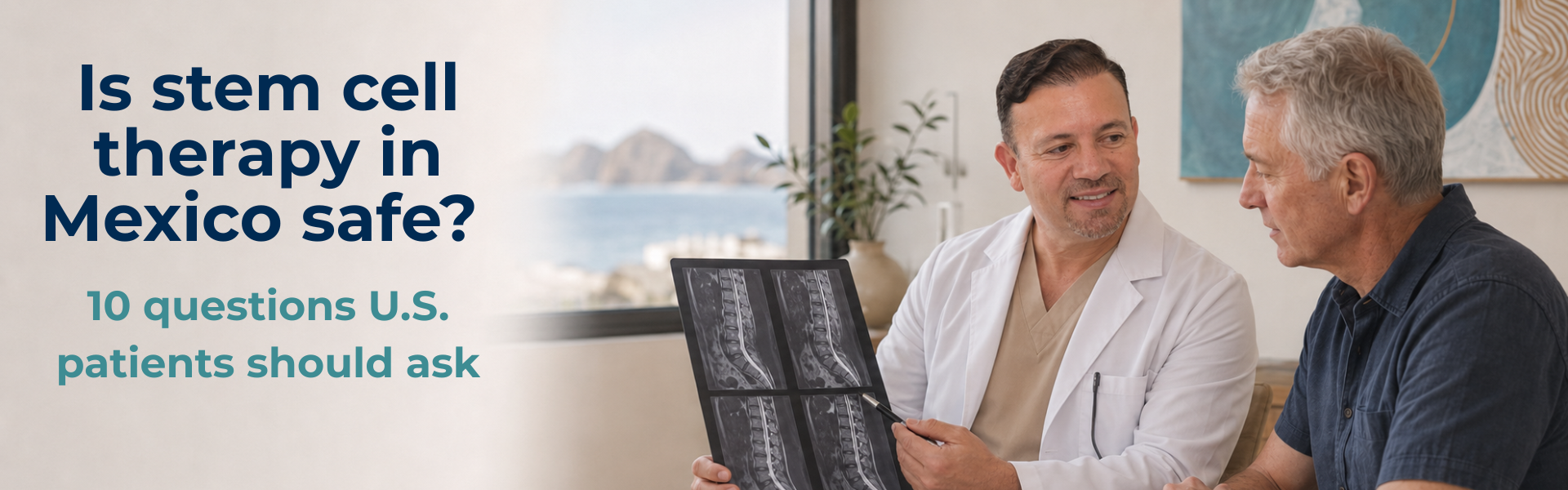
Not every patient is the right fit for regenerative medicine — and a responsible clinic will tell you that upfront. Whether you may benefit from treatments such as stem cell therapy depends on several medical factors that can only be assessed through a professional evaluation. Below, we explain what physicians typically consider when determining candidacy, which conditions are commonly evaluated, and how the process works at Cabo Regenerative Medicine in Los Cabos, Mexico.
What Does It Mean to Be a Candidate for Regenerative Medicine?
Being a candidate means that, based on your medical history, current condition, and treatment goals, a physician has determined that regenerative therapies may offer a reasonable path toward symptom improvement. It does not mean results are guaranteed — it means the medical team believes the treatment is worth exploring in your case.
Candidacy is not a yes-or-no checkbox. It is a clinical judgment made after reviewing imaging, lab work, and a thorough conversation about what you hope to achieve. A credible regenerative medicine clinic will always prioritize this evaluation over scheduling a procedure.
What Factors Does a Physician Evaluate?
During a candidacy assessment, physicians typically review several key areas:
Type and stage of the condition
Regenerative medicine is generally considered for degenerative or inflammatory conditions — not for acute injuries that require emergency surgical intervention. The stage of your condition matters: early-to-moderate joint degeneration, for example, is more commonly evaluated than advanced structural damage.
Overall health and medical history
Your physician will review your full medical background, including chronic conditions, medications, previous surgeries, and any active infections. Certain conditions — such as uncontrolled diabetes, active cancer, or blood disorders — may affect whether regenerative therapy is appropriate.
Previous treatments
Have you tried physical therapy, corticosteroid injections, or other conservative approaches? Understanding what has and has not worked helps the medical team assess whether regenerative options may add value to your treatment plan.
Patient goals and expectations
A physician will ask what you are hoping to achieve. Patients looking for reduced pain, improved mobility, or an alternative to joint replacement surgery tend to have goals that align with what regenerative medicine is designed to support. Patients expecting a guaranteed cure or immediate, complete elimination of symptoms may need a candid conversation about realistic outcomes.
Conditions Commonly Evaluated for Regenerative Medicine
While every patient is different, the following conditions are among those most frequently assessed at regenerative medicine clinics:
- Knee osteoarthritis — particularly mild-to-moderate cases where cartilage loss has not reached an advanced stage
- Chronic lower back pain — related to disc degeneration or facet joint issues
- Shoulder injuries — including rotator cuff tendinopathy and partial tears
- Hip joint degeneration — in patients looking to delay or avoid hip replacement
- Sports-related soft tissue injuries — such as ligament or tendon damage in active adults
This is not an exhaustive list, and inclusion here does not mean treatment is appropriate for every patient with these conditions. A medical evaluation is always the first step.
Who Is Typically Not a Candidate?
Transparency is a core part of responsible regenerative medicine. Not every patient who inquires will be recommended for treatment. Physicians may advise against regenerative therapy in situations such as:
- Severe bone-on-bone arthritis — when joint degeneration is too advanced for regenerative approaches to offer meaningful benefit
- Active infections — any ongoing infection must be resolved before considering cell-based therapies
- Conditions requiring emergency surgery — acute fractures, spinal cord compression, or other urgent orthopedic situations
- Uncontrolled systemic diseases — such as unmanaged autoimmune disorders or active malignancies
- Unrealistic expectations — patients who are seeking a guaranteed cure rather than a treatment option that may help
A clinic that tells you everyone qualifies is a clinic that may not be putting your interests first. At Cabo Regenerative Medicine, we believe the evaluation process protects both the patient and the integrity of the treatment.
Candidate vs. not a candidate: a quick comparison
| Factor | May Be a Candidate | Typically Not a Candidate |
|---|---|---|
| Joint condition | Mild-to-moderate degeneration | Severe bone-on-bone arthritis |
| Health status | Stable overall health | Active infection or uncontrolled systemic disease |
| Surgical need | Seeking non-surgical alternatives | Requires emergency surgery |
| Expectations | Open to potential improvement | Expects guaranteed cure |
How the Evaluation Works at Cabo Regenerative Medicine
The evaluation at Cabo Regenerative Medicine follows three steps: an initial consultation with our medical team, a clinical review of your case against established criteria, and — if appropriate — full travel and treatment coordination in Los Cabos.
Step 1: Initial consultation
You begin with a remote or in-person consultation with our medical team, led by Dr. Hugo Armenta. During this conversation, we review your medical history, current symptoms, imaging (X-rays, MRIs), and treatment goals.
Step 2: Medical review
Our team evaluates your case against established clinical criteria. If we determine that regenerative medicine may be a reasonable option, we explain the proposed treatment plan, expected timeline, and what the evidence supports. If we determine you are not a strong candidate, we tell you that directly.
Step 3: Travel and treatment coordination
For patients who move forward, we coordinate the full experience — from travel logistics and accommodation in Los Cabos to your treatment schedule and post-procedure follow-up. Our goal is to make the process as seamless as possible so you can focus on your health.
Learn more about the medical travel experience and our stem cell therapy treatments.
Frequently Asked Questions
How do I know if I qualify for stem cell therapy?
Candidacy is determined through a medical evaluation that reviews your condition, health history, and treatment goals. The only way to know is to consult with a qualified physician. Schedule an informational consultation to start the process.
Can I be evaluated remotely before traveling to Mexico?
Yes. We offer remote consultations so our medical team can review your case before you make any travel decisions. This helps ensure that the trip is worth your time and investment.
What if I am told I am not a candidate?
If our team determines that regenerative medicine is not the right option for you, we will explain why and, when appropriate, suggest alternative paths. We would rather be honest than recommend a treatment that may not serve you well.
Is regenerative medicine a replacement for surgery?
Regenerative medicine is not positioned as a replacement for all surgical procedures. It is designed as a non-surgical alternative for patients whose conditions fall within a treatable range. Your physician will help you understand whether your situation is better suited to regenerative therapy, surgery, or another approach.
Take the Next Step
If you are exploring non-surgical options for chronic joint pain or degenerative conditions, a medical evaluation is the responsible first step. Our team at Cabo Regenerative Medicine is here to help you understand whether regenerative medicine may be right for you — with no pressure and no assumptions.
Schedule an Informational Consultation
or call us at +52 (624) 142 5000
Results vary from patient to patient. Regenerative medicine treatments are not guaranteed to produce specific outcomes. All medical decisions should be made in consultation with a qualified physician.
References: International Society for Stem Cell Research (ISSCR) — Patient Resources · Mayo Clinic — Stem Cells: What They Are and What They Do
Leave a Reply