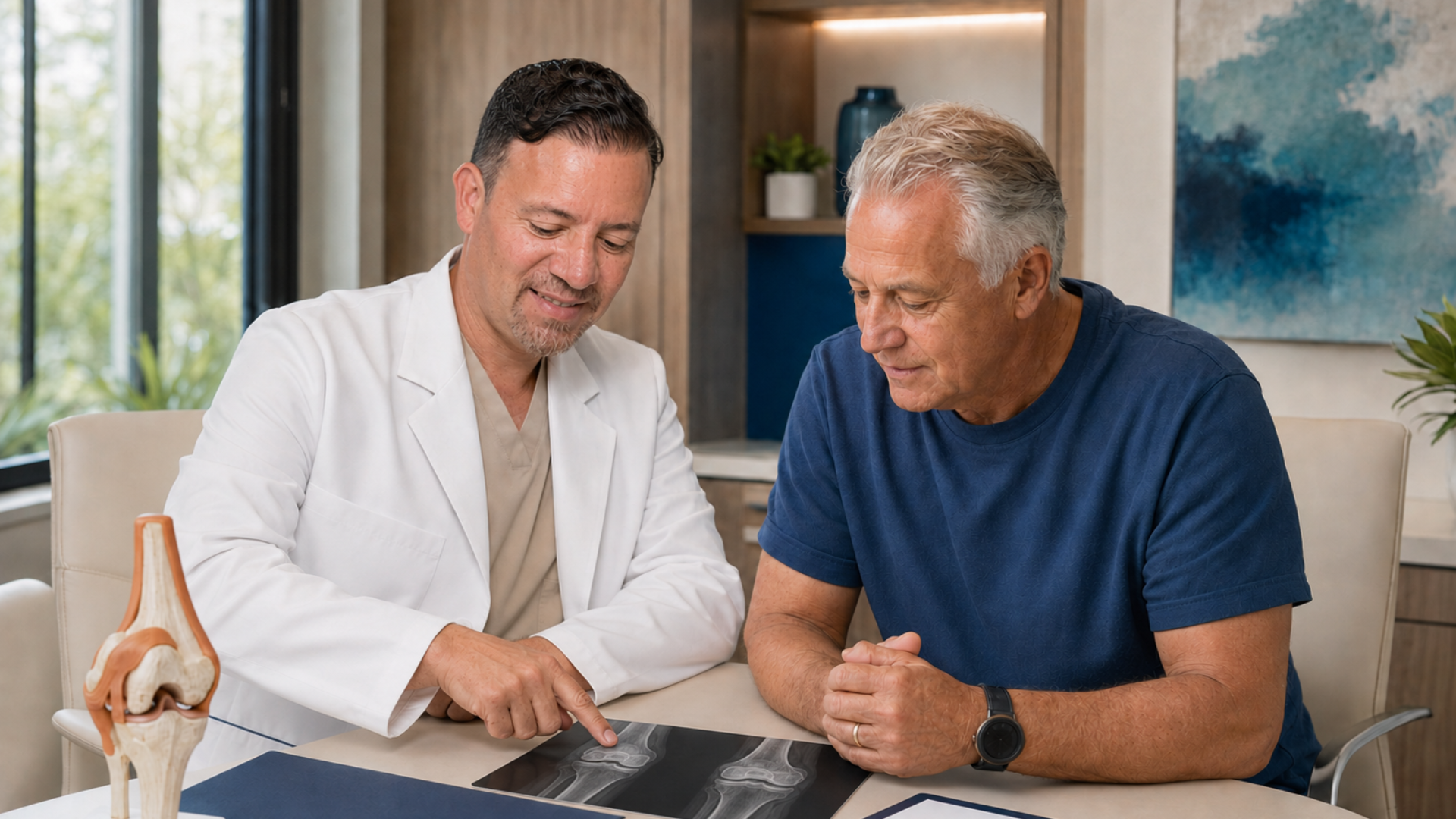
For U.S. patients, the best anti-aging treatments in Mexico are usually the ones delivered through a physician-guided process: medical evaluation, candidacy review, treatment planning, informed consent, and follow-up. When comparing options, focus less on marketing language and more on five factors that directly affect care quality: physician oversight, consultation depth, treatment planning, post-treatment follow-up, and travel convenience.
That distinction matters because clinical anti-aging care is not the same as a resort spa program or a wellness retreat. A physician guided anti aging treatment Mexico search should lead you to clinics that explain who supervises care, how decisions are made, what safety screening is required, and what support is available after you return home.
Why U.S. Patients Are Looking to Mexico for Physician-Guided Anti-Aging Care
U.S. patients often look to Mexico for anti-aging care because they want a more personalized, medically supervised experience combined with easier scheduling and practical medical travel options. In this context, “physician-guided” means a licensed doctor is involved in the parts of care that matter most: reviewing your health history, determining whether you are a candidate, explaining risks and alternatives, building a treatment plan, and overseeing follow-up.
That is different from a hotel spa, resort wellness package, or aesthetics-only experience where the emphasis may be relaxation, beauty services, or general wellness rather than medical decision-making. Some patients are specifically looking for anti aging treatment Mexico options that feel more clinical and accountable, especially if they have existing health conditions, are considering regenerative medicine, or want a plan that continues after they return to the U.S.
Mexico is also a major destination for cross-border care. Patients Beyond Borders has long identified Mexico as one of the leading global medical travel destinations for U.S. patients, largely because of proximity and accessibility. For anti-aging and regenerative care, that convenience only helps if it supports better consultation quality and continuity of care rather than replacing them.
For decision-ready patients, the practical question is not simply “What treatment is offered?” It is “How is the treatment selected, supervised, and followed up?” That is the lens that makes medical tourism anti aging Mexico comparisons more useful.
What Counts as an Anti-Aging Treatment Category in Mexico?
Anti-aging is a broad term, and clinics in Mexico may use it to describe very different services. Some focus on regenerative medicine, some on hormone-related optimization, some on IV or supportive therapies, some on skin and aesthetics, and others on wellness programming. The best category depends on your goals, baseline health, and physician evaluation, not on the broadest promise in an ad.
| Treatment category | Ideal candidate goals | Level of physician involvement | Consultation depth | Recovery and follow-up needs | Cross-border practicality for U.S. patients |
|---|---|---|---|---|---|
| Regenerative medicine approaches | Patients seeking support for healthy aging, recovery, inflammation management, or function-related concerns | Typically high when care is physician-led, especially if candidacy and safety screening are individualized | Usually detailed; may include medical history review, symptom discussion, prior treatment review, and goal setting | Varies by protocol; follow-up is important to monitor response and next steps | Often practical if the clinic coordinates travel and provides remote follow-up after return to the U.S. |
| Hormone-related optimization where appropriate | Patients asking about energy, recovery, sleep, or age-related hormonal concerns | High if medically appropriate, because prescribing and monitoring require physician oversight | Usually substantial; should include history, symptom review, and relevant lab interpretation | Often ongoing; follow-up can be more important than the initial visit | Requires strong cross-border communication because monitoring may continue after travel |
| IV and supportive therapies | Patients looking for hydration, nutrient support, or adjunctive wellness support | Ranges from low to moderate; should be higher when medical screening is involved | Can be brief or more detailed depending on the patient’s health status | Usually limited recovery needs; follow-up depends on whether therapy is standalone or part of a larger plan | Generally easy for travelers, but should not be mistaken for a full anti-aging medical plan |
| Aesthetics and skin-focused treatments | Patients focused on visible skin, facial, or cosmetic concerns | Moderate to high depending on the procedure and who performs it | Should include skin assessment, candidacy review, and realistic expectation setting | May involve short-term recovery and photo-based follow-up | Practical for many travelers, though repeat visits may be needed for some protocols |
| Wellness programs and retreats | Patients seeking stress reduction, nutrition support, fitness, or general lifestyle reset | Often low unless a physician is clearly involved in evaluation and planning | Usually lighter and less medical unless integrated into a clinic model | Follow-up varies widely and may be minimal | Easy to book, but often less suitable for patients specifically seeking medical oversight |
For many U.S. patients, the categories that usually require the most consultation and follow-up are regenerative medicine and hormone-related care. That is because both depend heavily on candidacy, contraindication screening, treatment sequencing, and monitoring over time. By contrast, supportive IV therapies or general wellness programs may be easier to access but often involve less individualized medical planning.
This is why a neutral comparison matters. A clinic should be able to explain not only what category it offers, but also why that category fits your goals better than another option. If the answer is mostly promotional and not clinical, keep looking.
How to Judge Physician Oversight, Consultation Quality, and Treatment Planning
If you are comparing clinics, this is the section that matters most. U.S. patients can verify medical oversight before booking anti-aging treatment in Mexico by looking for named physician involvement, a clear consultation process, transparent safety screening, and a defined follow-up pathway. If those elements are vague, the care model is probably vague too.
A strong physician-guided clinic should make the following points easy to find and easy to understand:
- Who the supervising physician is by name and credentials
- Whether the physician reviews your medical history before treatment
- How candidacy is determined and what factors may disqualify a patient
- Whether diagnostics or prior records are reviewed when relevant
- What realistic outcomes, limitations, and alternatives are discussed
- Who performs each step of treatment and who is present on treatment day
- What written instructions and follow-up support are provided afterward
These are not minor details. They are the difference between a medically guided plan and a packaged experience. Informed consent should be more than a signature. It should reflect a real conversation about goals, risks, expected timeline, and what happens if you are not a fit.
For U.S. patients researching Cabo Regenerative Medicine, this is where internal trust cues matter. A clinic should provide a clear about page, a visible physician profile such as Dr. Armenta’s page, and a transparent explanation of treatment philosophy and patient safety. If a clinic offers regenerative options such as stem cell therapy, it should also explain how treatment decisions are made and what safety principles guide care. A useful sign of seriousness is educational content that addresses screening and risk directly, such as a dedicated safety article or safety page.
Here is a practical checklist U.S. patients can use when comparing clinics:
- Named physician: Is there a specific doctor accountable for evaluation and oversight?
- Pre-treatment review: Do you complete a meaningful medical intake before travel?
- Candidacy standards: Does the clinic explain who may not be eligible?
- Consultation depth: Is there enough time to discuss goals, history, and alternatives?
- Written care plan: Will you receive a plan that explains what is being done and why?
- Role clarity: Do you know who performs the consultation, procedure, and follow-up?
- Expectation setting: Are outcomes described realistically rather than guaranteed?
- Aftercare: Is follow-up structured after you return to the U.S.?
In short: the best anti-aging clinic is not the one with the broadest menu. It is the one that can defend its recommendations with physician judgment, transparent process, and continuity of care.
Best Destinations in Mexico for U.S. Patients: Cross-Border Convenience and Care Experience
How does medical tourism for anti-aging treatment in Mexico work for U.S. patients? Usually, it starts with a remote consultation or record review, followed by travel for in-person evaluation and treatment, then remote follow-up once the patient returns home. That means destination choice should support the care process, not distract from it.
Mexico’s appeal is partly logistical. The U.S. International Trade Administration has noted that Mexico remains one of the most visited international destinations for U.S. travelers, and major Mexican medical tourism hubs benefit from direct flights, familiar hospitality infrastructure, and short travel times from many U.S. cities. For patients, those factors matter because easier travel can reduce friction around scheduling, companion travel, and short recovery stays.
But convenience should be evaluated through a medical lens. The best destinations for anti-aging care are the ones where you can communicate clearly with the clinic, get answers before booking, arrive without complicated transfers, and maintain contact after treatment.
| Destination factor | Why it matters for U.S. patients | What to look for |
|---|---|---|
| Flight access | Shorter, simpler travel makes treatment scheduling and companion support easier | Direct or one-stop routes from major U.S. airports and predictable arrival logistics |
| Recovery practicality | Patients may need a calm, manageable setting for a short stay after treatment | Clear guidance on how long to remain locally and what activity limits apply |
| Communication | Cross-border care works better when questions are answered quickly and clearly | Responsive staff, English-language support, and direct access to clinical information |
| Scheduling reliability | Travel plans depend on accurate timing for consultation, treatment, and discharge | Written itinerary, pre-arrival instructions, and realistic time expectations |
| Follow-up access | Many anti-aging plans continue after the patient returns to the U.S. | Remote check-ins, clear contact channels, and documented aftercare steps |
| Clinic coordination | Good coordination reduces stress and helps patients focus on care decisions | Support with arrival planning, treatment-day logistics, and post-visit communication |
For many U.S. patients, Los Cabos stands out because it combines strong air access with a setting that can make short-stay recovery more manageable. That said, Cabo is only the right choice if the clinic itself is organized around consultation quality and continuity of care. Destination alone does not create safety or good outcomes.
That is why clinics such as Cabo Regenerative Medicine should be evaluated not as tourism brands, but as care teams. The question is whether the destination supports physician access, treatment planning, and follow-up well enough to justify the trip.
Questions to Ask Before Choosing a Mexico Anti-Aging Clinic
What should U.S. patients look for in a Mexico anti-aging clinic before booking? Start with questions that reveal how the clinic thinks, not just what it sells. Good clinics answer these directly. Weak clinics answer them vaguely or redirect to marketing language.
- Who is the supervising physician? Ask for the doctor’s name, role, and level of involvement in evaluation, treatment planning, and follow-up.
- What is included in the consultation? Ask whether the consultation covers medical history, current medications, goals, contraindications, and alternatives.
- How is candidacy determined? Ask what records, labs, or prior diagnoses are reviewed and what factors may make you ineligible.
- Who performs each step? Ask who conducts the consultation, who administers treatment, and whether the physician is present or directly supervising.
- What follow-up is offered after I return home? Ask how the clinic handles check-ins, questions, symptom updates, and next-step recommendations for U.S. patients.
- What happens if I am not a fit? A credible clinic should be willing to say no, defer treatment, or recommend a different path when appropriate.
- Will I receive a written care plan? Ask for documentation that explains the rationale, timeline, aftercare, and expected monitoring.
- Where can I review your background and safety philosophy? Look for an about page, a physician bio such as Dr. Armenta’s profile, and educational material on safety.
These questions are especially important when comparing physician-guided anti-aging treatment in Mexico with resort-style programs. A resort spa may offer comfort and convenience, but it may not offer medical screening, individualized planning, or structured follow-up. If your goal is medically supervised anti-aging care, ask questions that force that distinction into the open.
One more practical point: ask how communication works once you are back in the U.S. What should U.S. patients ask about follow-up care after returning home from treatment in Mexico? Ask who responds, how quickly, whether follow-up is scheduled or only on request, and what signs or symptoms should prompt immediate contact. Cross-border continuity is not a bonus feature. For many treatment categories, it is part of the care itself.
How to Take the Next Step With a Physician-Guided Plan
If you are narrowing your options, the next step is not to chase the broadest anti-aging promise. It is to book a real conversation with a clinic that can explain its medical process clearly. The right fit should offer doctor-led evaluation, a defined treatment roadmap, transparent safety screening, and follow-up that still works once you are back in the U.S.
Cabo Regenerative Medicine is one example of that physician-guided model for U.S. patients seeking care in Mexico. You can review the clinic’s homepage, learn more about the team, read about Dr. Armenta, explore the clinic’s approach to stem cell therapy, review its safety information, or reach out through the contact page with your questions.
For patients who want to compare options without committing to a one-size-fits-all package, start with a free trial.
Leave a Reply